
Commercial Cool Roofing Long Beach, CA
DK Commercial Roofing provides commercial cool roofing Long Beach for qualifying commercial roofs where a reflective roofing surface may help improve solar reflectance and provide a renewed protective layer over an existing roof system.
Cool roofing is not simply “white paint on a roof.” The existing roof condition, substrate, drainage, moisture, seams, penetrations, equipment, and compatibility all need to be evaluated before a coating or reflective system is considered.
What Makes a Commercial Roof “Cool”?
Cool roofing refers to roofing surfaces designed to reflect more solar energy and absorb less heat than conventional dark roof surfaces.
For property owners researching cool roofing Long Beach, the key question is whether the existing roof is a good candidate for a reflective coating or restoration system. Roof condition matters more than color alone.
A roof with active leaks, trapped moisture, damaged insulation, open seams, or significant deterioration may need commercial roof repair Long Beach before any reflective system is considered.
Conditions That Matter Before Cool Roofing
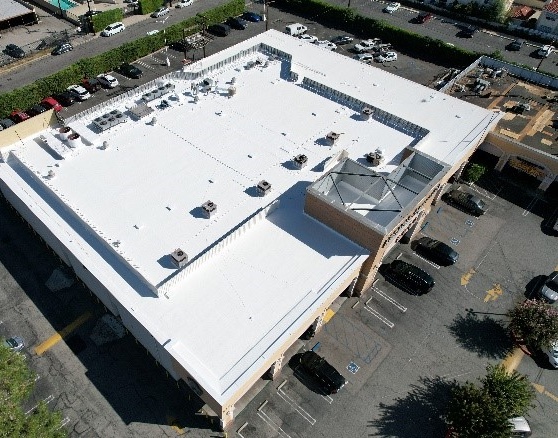
A reflective roof system should be selected only after the existing roof assembly is reviewed for suitability.
Existing Roof Condition
The roof should be evaluated for deterioration, open seams, punctures, damaged flashing, and other visible concerns.
Moisture
Trapped moisture or saturated insulation can affect whether a coating or restoration system is appropriate.
Drainage
Standing water, blocked drains, low areas, and poor water flow should be reviewed before surface restoration.
Material Compatibility
The coating or reflective system needs to be compatible with the existing roof material and preparation requirements.
Penetrations & Curbs
HVAC curbs, pipes, skylights, walls, and other roof penetrations need proper detailing within the system.
Previous Repairs
Older patches and repair areas should be checked for adhesion, compatibility, and remaining serviceability.
Reflective Roofing Can Be a Restoration Option
When the existing roof remains suitable for restoration, a reflective coating system may help extend the useful service of the roof without immediately removing and replacing the entire assembly.
That does not mean every roof should be coated. If deterioration is widespread, moisture is extensive, or the roof has reached the end of its practical service life, owners considering commercial roof replacement Long Beach may need a broader roofing plan instead.
Surface Preparation Has a Direct Impact on Performance
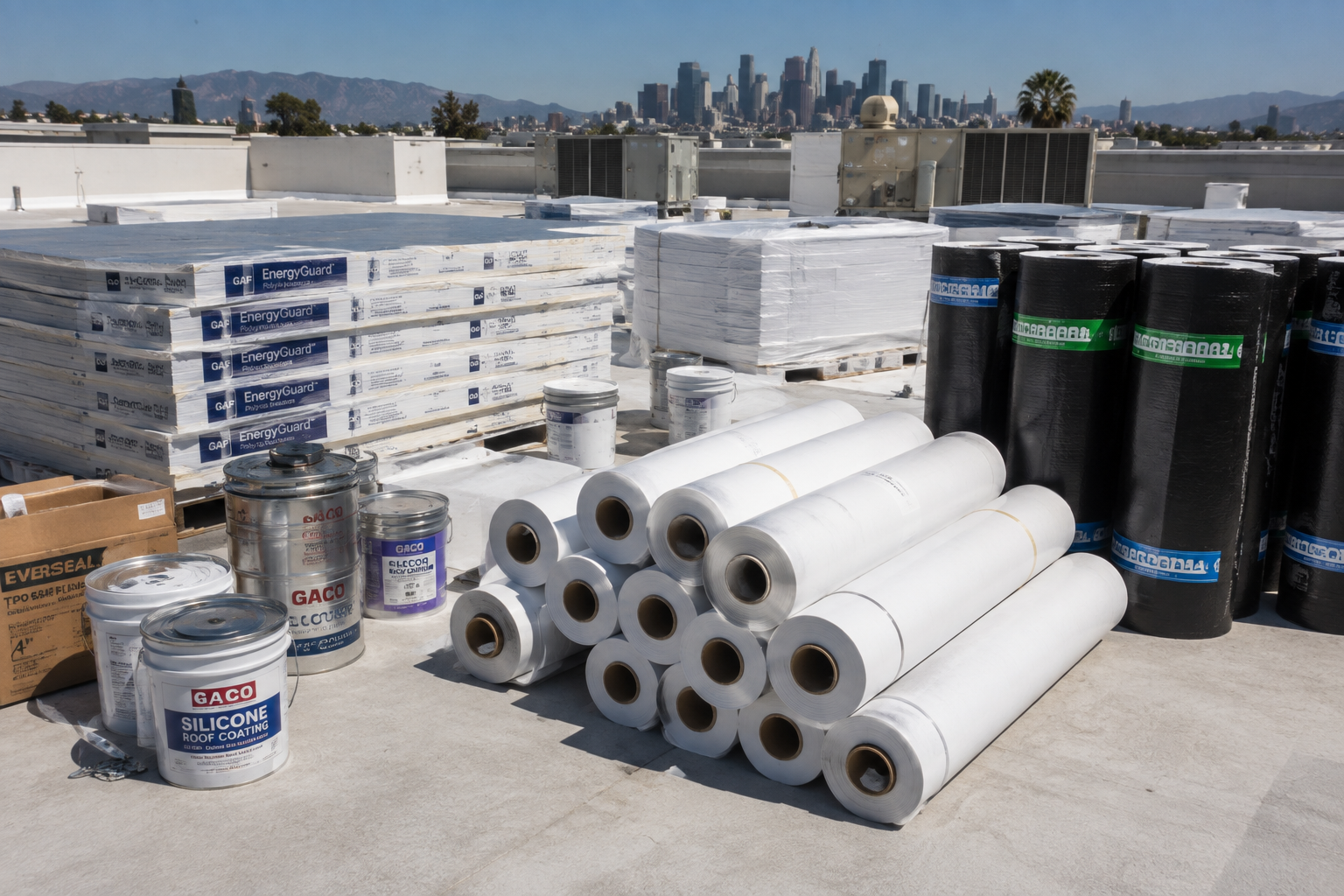
Reflective roofing systems depend heavily on preparation and detailing before the finish coat is applied.
Depending on the roof system, preparation may include cleaning, removing loose material, addressing seams, repairing punctures, treating penetrations, reinforcing details, and making sure the surface is dry and suitable for the selected coating system.
If the roof is better suited for a more continuous restoration approach, review seamless commercial roofing Long Beach to compare another restoration-focused option.
From Existing Roof to Reflective Surface
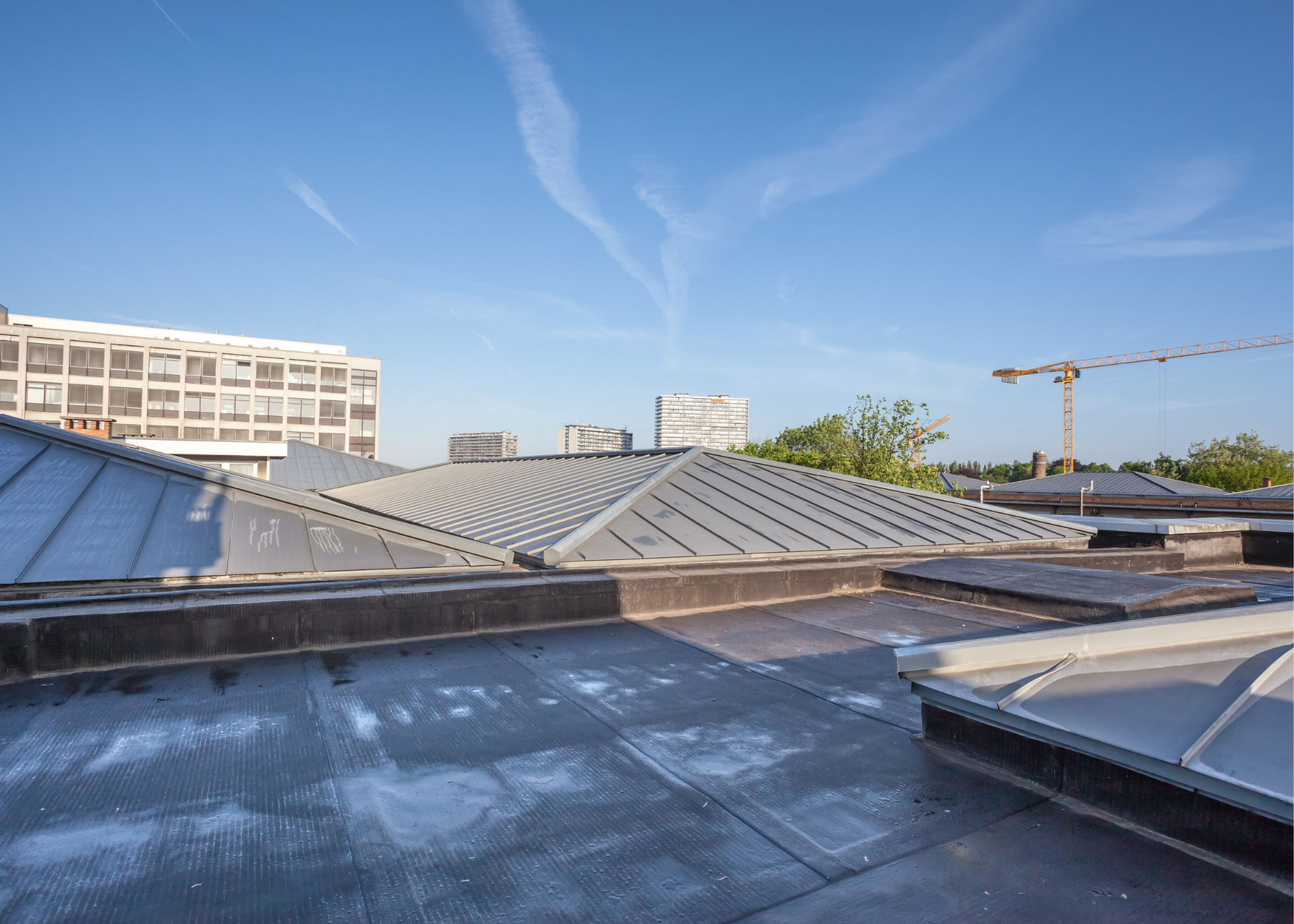
Reflective Roofing for Commercial Properties
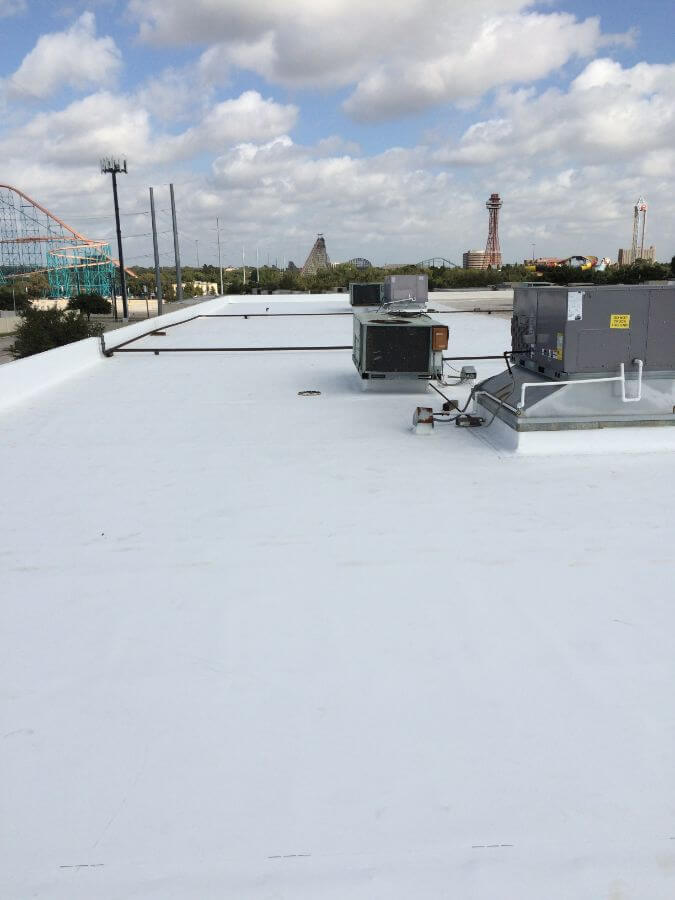
Cool roofing may be considered for compatible commercial flat and low-slope roofs across a range of property types.
From Roof Evaluation to Reflective Finish
Review membrane, seams, flashing, moisture indicators, drainage, penetrations, and repairs.
Determine whether the existing roof is suitable for the selected reflective system.
Clean, repair, reinforce, and detail the roof as required before coating.
Install the compatible reflective coating or restoration system according to the project scope.
Continue monitoring drains, penetrations, traffic areas, equipment zones, and coating condition.
Cool Roofing Services for Long Beach Properties
Property owners comparing a commercial roofing company Long Beach can use a roof evaluation to determine whether repair, maintenance, reflective roofing, seamless restoration, or a broader roofing scope is appropriate.
Roofing Services
Commercial Roof Repair Long Beach→ Commercial Roof Replacement Long Beach→ Commercial Roof Maintenance Long Beach→ Seamless Commercial Roofing Long Beach→ Commercial Skylight Roofing→Local Roofing Pages
Belmont Shore Commercial Roofing→ East Village Arts District Roofing→ Walter Pyramid Area Commercial Roofing→Nearby Markets
Commercial Roofing Orange County→ Commercial Roofing Irvine→ Commercial Roofing Anaheim→ Commercial Roofing Los Angeles→Questions About Cool Roofing?
Common questions Long Beach property owners and managers may have when evaluating a reflective commercial roofing system.