Commercial Modified Bitumen Roofing for Flat & Low-Slope Roofs
DK Commercial Roofing provides modified bitumen roofing in Long Beach for commercial buildings that need installation, repair, maintenance, or replacement of asphalt-based membrane roofing systems. Modified bitumen is commonly used on flat and low-slope roofs where layered protection, reinforced membrane sheets, durable surface options, and proven commercial roofing performance are important.
A Reinforced Asphalt-Based System for Commercial Flat Roofs
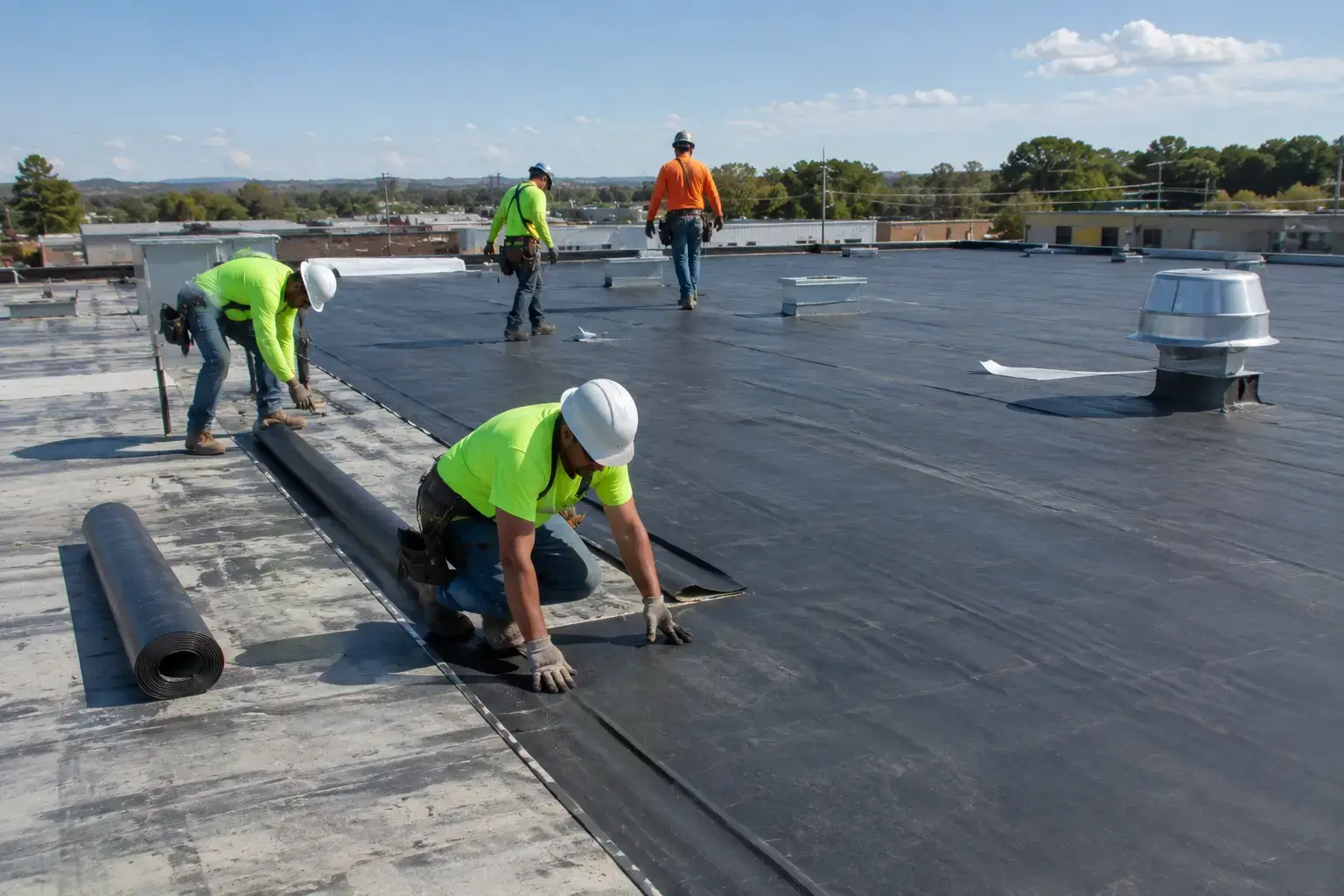
Modified bitumen commercial roofing uses asphalt-based membrane sheets reinforced with polymer modifiers and supporting materials designed for low-slope roofing applications. Depending on the specific system, membranes may be installed using torch-applied, self-adhered, cold-applied, or other compatible methods.
Modified bitumen can be a practical option for commercial properties that need a robust membrane system with layered protection and a surface designed for ongoing roof exposure. Some systems include mineral granules or reflective surfacing that can help protect the membrane from UV exposure and weathering.
The right scope may involve modified bitumen roof installation, localized modified bitumen roof repair, or commercial roof replacement depending on membrane condition, seams, flashing, moisture, drainage, and prior repair history.
Why Commercial Properties Use Modified Bitumen Systems
Modified bitumen remains a common low-slope commercial roofing option because it combines reinforced membrane sheets, layered protection, repairability, and a familiar asphalt-based roofing approach.
Reinforced Membrane
Modified bitumen uses reinforced sheets designed to provide durable waterproofing across compatible commercial roof assemblies.
Layered Protection
Depending on the system, multiple compatible layers can provide added redundancy across roof areas and vulnerable details.
Repairable Areas
Localized membrane, flashing, seam, penetration, or surface issues may be repairable when the surrounding system remains serviceable.
Commercial Versatility
Modified bitumen may be used on warehouses, offices, apartments, retail buildings, schools, churches, and other low-slope properties.
Membrane Performance Depends on Seams, Flashing & Drainage
As with any commercial roof system, the open field of the membrane is only part of the equation. Seams, laps, flashing, penetrations, drains, curbs, roof edges, transitions, previous repairs, and rooftop traffic are often where problems begin.
Regular commercial roof inspections and commercial roof maintenance can help identify cracking, open laps, flashing deterioration, punctures, surfacing loss, drainage issues, and aging repair areas before they become larger concerns.
Laps & Seams
Membrane laps and seam areas need consistent adhesion and detailing to remain watertight across the roof assembly.
Walls & Penetrations
Curbs, parapets, penetrations, edges, equipment, and transitions require compatible flashing tied into the membrane system.
Drainage Areas
Drains, scuppers, low spots, and water-flow paths should be kept clear and monitored for ponding or deteriorated detail work.
Granules & Surfacing
Granule loss, coating wear, cracking, exposed asphalt, and surface deterioration can provide clues about membrane aging and exposure.
Built for Working Flat Roofs


From Roof Evaluation to Finished Membrane System
Evaluate
Review the existing roof, substrate, drainage, moisture concerns, equipment, penetrations, access, and project goals.
Prepare
Complete required deck, insulation, cover-board, base-sheet, or substrate work before membrane installation.
Install Membrane
Install the selected modified bitumen membrane using a compatible system and application method.
Seal & Flash
Complete laps, flashing, drains, penetrations, curbs, edges, transitions, and other critical waterproofing details.
Inspect & Maintain
Review the completed roof and continue monitoring membrane condition, seams, surfacing, flashing, drainage, and traffic areas.
Modified Bitumen Roofing for Long Beach Buildings
Warehouses
Low-slope commercial roofs with large surface areas, drains, equipment, penetrations, and maintenance access.
Office Buildings
Modified bitumen systems around occupied spaces, HVAC equipment, drains, parapets, and roof-access areas.
Apartments & HOAs
Commercial-style low-slope roofing for multifamily properties, shared structures, and managed building systems.
Retail Centers
Roof systems for active retail properties with tenant spaces, equipment, drainage, deliveries, and service traffic.
Churches
Low-slope roofing for sanctuaries, classrooms, offices, fellowship areas, and related commercial-style buildings.
Schools
Commercial membrane roofing for classrooms, cafeterias, gyms, offices, drains, and rooftop equipment.
Industrial Facilities
Modified bitumen may be evaluated for selected industrial roofs based on substrate, exposure, traffic, and drainage conditions.
Mixed-Use Properties
Commercial roofing for buildings with multiple roof zones, tenants, access needs, and maintenance requirements.
Choose the Service Based on Roof Condition
Modified Bitumen Installation
New construction, additions, or major roofing projects may use modified bitumen as part of a new commercial roof replacement.
Modified Bitumen Repair
Localized seam failures, cracks, punctures, flashing problems, drain details, or surface deterioration may be candidates for modified bitumen roof repair.
Modified Bitumen Replacement
Widespread deterioration, repeated leaks, extensive cracking, moisture concerns, or aging roof assemblies may justify commercial roof replacement.
Commercial Modified Bitumen Roofing Across Long Beach
DK Commercial Roofing provides commercial modified bitumen roofing services in Long Beach for flat and low-slope properties that need installation, repair, inspection, maintenance, or replacement. The right scope depends on membrane condition, seams, surfacing, flashing, drainage, moisture, penetrations, traffic areas, and the long-term roofing plan.
For location-specific commercial roofing information, visit our TPO roofing Long Beach and PVC roofing Long Beach pages.
Related Long Beach Roofing Services
Modified bitumen roofing often connects with installation, repair, maintenance, inspection, coatings, replacement, TPO, PVC, and EPDM roofing decisions.
Layered Roofing Built Around Real Roof Conditions
Modified bitumen roofing in Long Beach can be a practical choice for selected flat and low-slope commercial buildings where owners want a reinforced asphalt-based membrane with layered protection. The recommendation should still be based on the existing roof assembly, drainage, penetrations, surfacing, insulation, previous repairs, rooftop traffic, and the building’s long-term maintenance plan.
Long Beach commercial roofs also operate under strong Southern California sun, coastal air, seasonal rain, and frequent rooftop service activity. Those conditions make seams, flashing, drains, scuppers, equipment curbs, traffic areas, and exposed membrane surfaces important parts of a complete roof evaluation.
Depending on the roof condition, DK Commercial Roofing may recommend targeted commercial roof repair in Long Beach, proactive commercial roof maintenance, or full commercial roof replacement.
Modified Bitumen Evaluation Points
We look at the full roof assembly instead of judging the membrane by age alone.
Questions About Modified Bitumen Roofing?
Modified bitumen is an asphalt-based reinforced membrane roofing system commonly used on commercial flat and low-slope roofs.